CalculatorLive
PJM Capacity Charge Estimator
Peak load contribution and zone to the annual capacity charge at the 2025/26 to 2028/29 clearing prices, and what ELRP claws back.
Method
Daily UCAP obligation = PLC x EDC loss multiplier x base zonal RPM scaling factor x Forecast Pool Requirement, per PJM Manual 18 section 7.5. The annual charge is the obligation times the rest-of-RTO clearing price times the days in the delivery year. Clearing prices come from PJM’s Base Residual Auction reports (2025/26 $269.92, 2026/27 $329.17, 2027/28 $333.44, 2028/29 $325.00 per MW-day), scaling factors and FPR from the BRA results workbooks for 2026/27 to 2028/29. The 2025/26 factors are not in our data and the tool asks for them. ELRP pays the clearing price on nominated MW at the demand-resource ELCC PJM published for each auction (69% for 2026/27, 92% for 2027/28), before the curtailment service provider’s share.
The worked plant in PJM capacity: the factory bill is the default scenario. Every input is mirrored to the URL so a scenario can be shared as a link.
Default assumptions come from the Large-Load Cost Table. Pro subscribers can save inputs. Institutional seats get the underlying series.
Articles that use this calculator
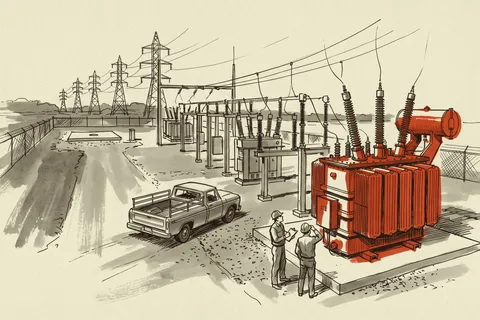
What 50 MW Costs in 15 US Markets
A 50 MW connection requested in Northern Virginia in 2026 energizes in 2033 after $75 million of collateral and a 14 year contract, while the same 50 MW in Houston posts no rule-mandated security and can be live in 2028, per Open Factory's Large-Load Cost Table as of August 2026.
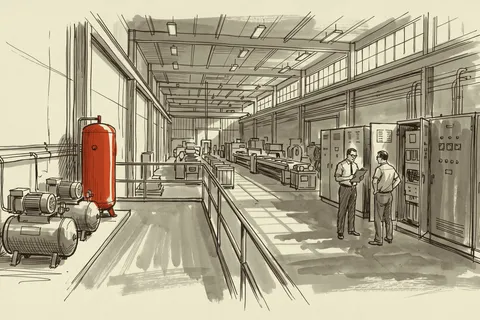
A Factory Owner's Guide to the PJM Capacity Charge
PJM's RTO capacity clearing price rose from $28.92 to $329.17 per MW-day in two auctions, so a 5 MW plant in Met-Ed territory pays about $568,000 for capacity in the delivery year starting June 1, 2026 against about $50,000 in 2024, per Open Factory's PJM Capacity Charge Estimator.
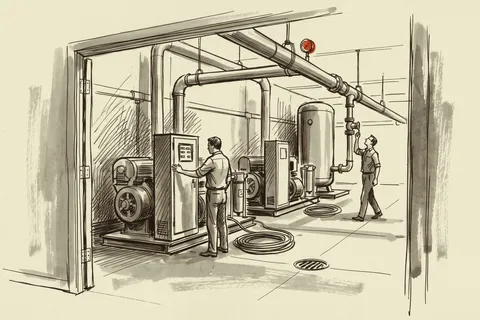
Compressed Air Is 10% of Your Factory's Power Bill
Compressed air takes about 10% of a typical plant's electricity by DOE's count, and a 200 hp rotary screw compressor running 6,000 hours a year at the 2025 US industrial rate of 8.62 cents per kWh costs about $70,000 a year. Open Factory finds a leak program worth $83,000.
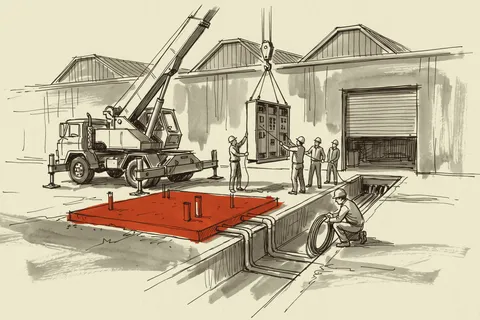
The 2 MW Plant Service Upgrade Nobody Budgets Right
A 400-person plant adding 2 MW of service pays $400k to $1.2M for the items the switchgear quote omits, and with the utility-owned pad-mount at 52 to 104 weeks the crane lands in week 74. Open Factory's Large-Load Cost Table shows the sequencing that pulls energization forward by 20 weeks.
When a Megapack Beats a Static UPS
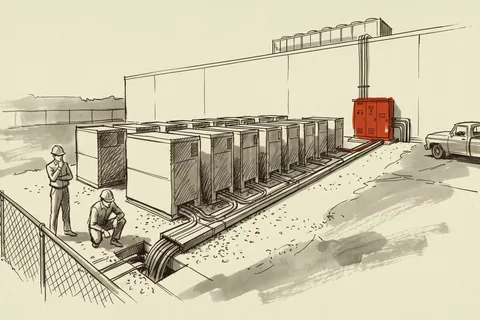
A 24 MW, 48 MWh block of twelve Tesla Megapack 2 XL units costs about $14.4 million installed at January 2026 prices, $10.1 million after the 30% storage credit, against about $17.5 million for the N+1 static UPS in a 20 MW hall, per Open Factory's Datacenter MEP Cost Table.
What Hyperscaler Nuclear PPAs Tell a Factory Negotiating a 15-Year Contract
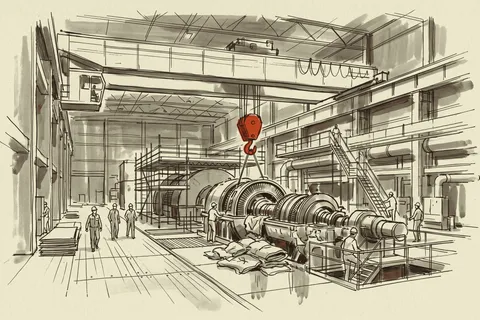
Microsoft pays about $112 per MWh for 835 MW from the Crane nuclear restart on a 20-year contract, a 70 to 90% premium to wholesale, so Open Factory's Large-Load Cost Table treats that as the reference price for a 15-year factory power contract as of December 2025.
Datacenter Construction Is Eating Your Electricians
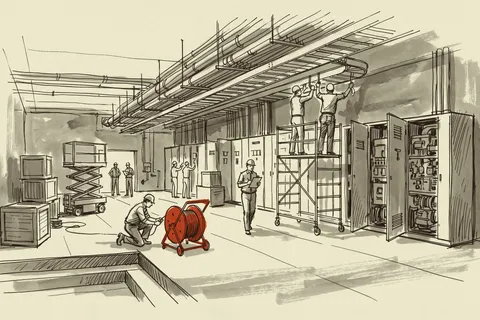
Loudoun County electrical contractor payrolls rose 138% from 5,615 people in 2019 to 14,022 in March 2026, while the national BLS median electrician wage rose 12.5% against 25.6% CPI from May 2019 to May 2025, per Open Factory's Large-Load Cost Table.
The 30% Fuel-Cell ITC Is the Last Federal Subsidy for On-Site Power
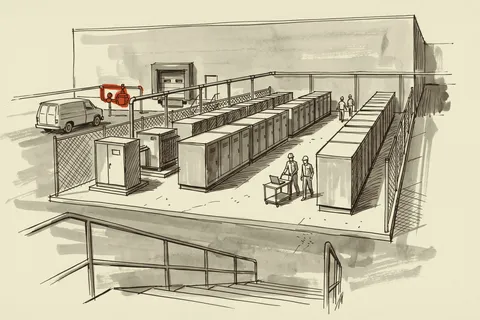
Since July 4, 2025, the 30% federal investment credit survives only for fuel cells among gas-fired on-site power, with wind and solar needing construction by July 4, 2026 and gas CHP getting nothing, and Open Factory's math turns a 2.5-year payback at $210/MWh in California into 1.7 years.
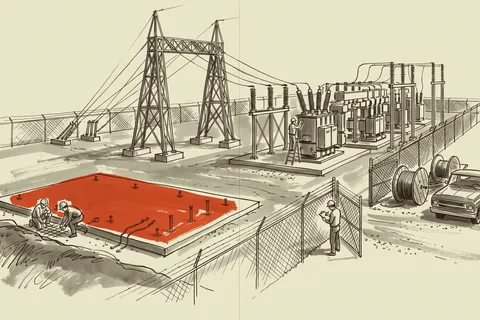
Introducing the Large-Load Cost Table: 15 Markets Side by Side
Open Factory's Large-Load Cost Table, version 0.1, compares a 50 MW connection across 15 US utilities on eight tariff cells each: 53 of the 120 cells come from primary documents, 20 from trade press, 2 from arithmetic, and 45 are not published anywhere, as of August 2026.
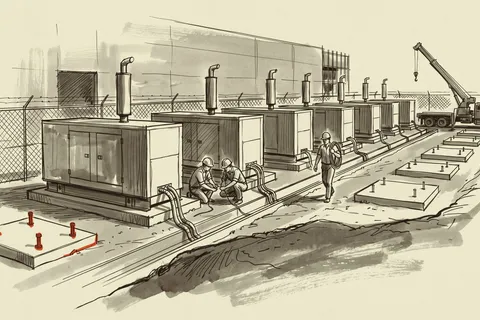
Cummins and Caterpillar Are Sold Out Through 2028
Cummins is taking generator orders well into 2028 and Caterpillar closed June 2026 with $72.1 billion of firm backlog, and Open Factory's Lead-Time Monitor shows published lead times of 50 to 66 weeks for a 1,500 to 2,000 kW diesel genset and 90 to 110 weeks above 3,500 kW.