CloudNC and Limitless Labs raised $40 million between them in the twelve weeks from 16 June to 8 September 2026, and both are aiming it at the same 4,790 people. That is how many CNC tool programmers work in America’s machine shops in the last industry-level BLS survey, against 64,080 machinists and 16,619 shops. CloudNC, founded in London in 2015, says its CAM Assist software now runs in more than 1,000 machine shops, four in five of them in the United States. Limitless Labs, founded in Tel Aviv in 2024, has taken its CAM Agent from a first pilot to production at Blue Origin, Cadillac Formula 1 and ISCAR in about eighteen months. This piece covers the bottleneck in numbers, how each company got here, what the two products do inside Mastercam, Siemens NX, Fusion, GibbsCAM and Cimatron, what shops report, what a seat should be worth to a buyer, and behind the wall, the pilot plan, the seat math by shop size and the questions to put to both vendors.
A programmer at the BLS median of $68,120 with a 30% load costs $88,556 a year, or $42.58 an hour. If half of those hours are spent in CAM, the CAM hours cost $44,278, and Limitless Labs’ production figure of a 50% cut returns $22,139 a year per programmer. CloudNC’s published figure of up to 80% returns $35,422. Both assumptions, the load and the CAM share, are marked (A) in the CSV and are the two numbers a buyer should replace with their own.
The 4,790-Person Bottleneck
The shortage that both companies describe is visible in one BLS table. In May 2023 the machine-shop industry, NAICS 332710, employed 265,030 people: 64,080 machinists at a median $23.62 an hour, 32,440 CNC tool operators at $23.40, 14,670 welders at $23.76 and 4,790 CNC tool programmers at $31.90. The programmer is the highest-paid production role in the building and the scarcest. Across all industries the programmer’s median reached $68,120 in May 2025, and BLS projects about 30,400 openings a year for machinists and tool and die makers through 2035, most of them replacements for people retiring.
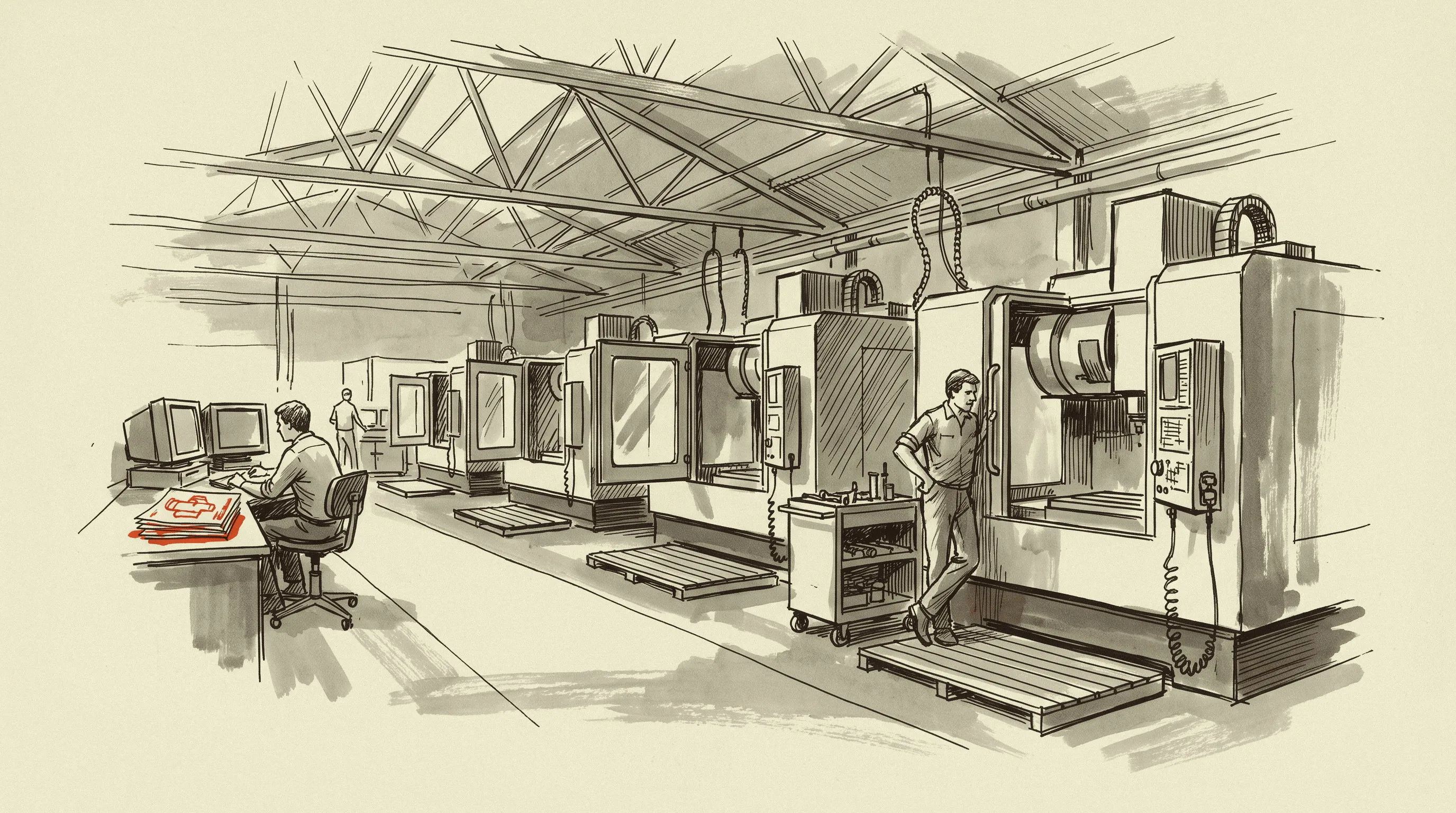
64,080 machinists, 32,440 CNC operators, 14,670 welders, 4,790 programmers. Divide the programmers by IBISWorld’s 16,619 shops and the average shop has 0.29 of one. In most shops the owner or the lead machinist programs between setups, and the machine waits while they do. Limitless Labs cites 409,000 unfilled positions and a gap of 1.9 million by 2033 for the wider manufacturing workforce, with a quarter of it aged 55 or older. The 171-day capex lead time that ISM reports is partly this: machines arrive before the people who can program them, and the Lead-Time Monitor counts the machines, not the programmers.
16,619 shops, 4,790 programmers in them, 30,400 machinist openings a year. The programmer’s seat, not the spindle, is the constraint on a 16,619-shop industry, and two companies have now raised $155 million between them to put software in it. The Factory Automation Roadmap lists CAM automation alongside robot tending and pallet pools as the three ways a shop adds spindle hours without adding a shift, and the robot cell piece priced the tending option at $144,432 for a cobot cell.
CloudNC: From a Chelmsford Test Factory to 1,000 Shops
Theo Saville came to the problem from metal 3D printing research at Warwick Manufacturing Group, where, as the company tells it, he got used to the simplicity of running a printer and was struck by how little of that automation existed in CNC machining. He has an M.Eng in manufacturing and mechanical engineering from Warwick and a background in defence. His co-founder Chris Emery, now chief scientist, has an M.Eng in computing from Imperial College London, worked as a software engineer at Google, and built a Mac application, EventBox, that Realmac Software acquired within a year of its release. Both made the Forbes 30 Under 30 list for manufacturing in 2019, and Saville the MIT 35 Under 35 in 2023. The company they started in 2015 did something unusual for a software firm: it built its own machine shop in Chelmsford, Essex, to test the software on real parts, and that shop supplies precision components to the UK Atomic Energy Authority for fusion diagnostic windows.
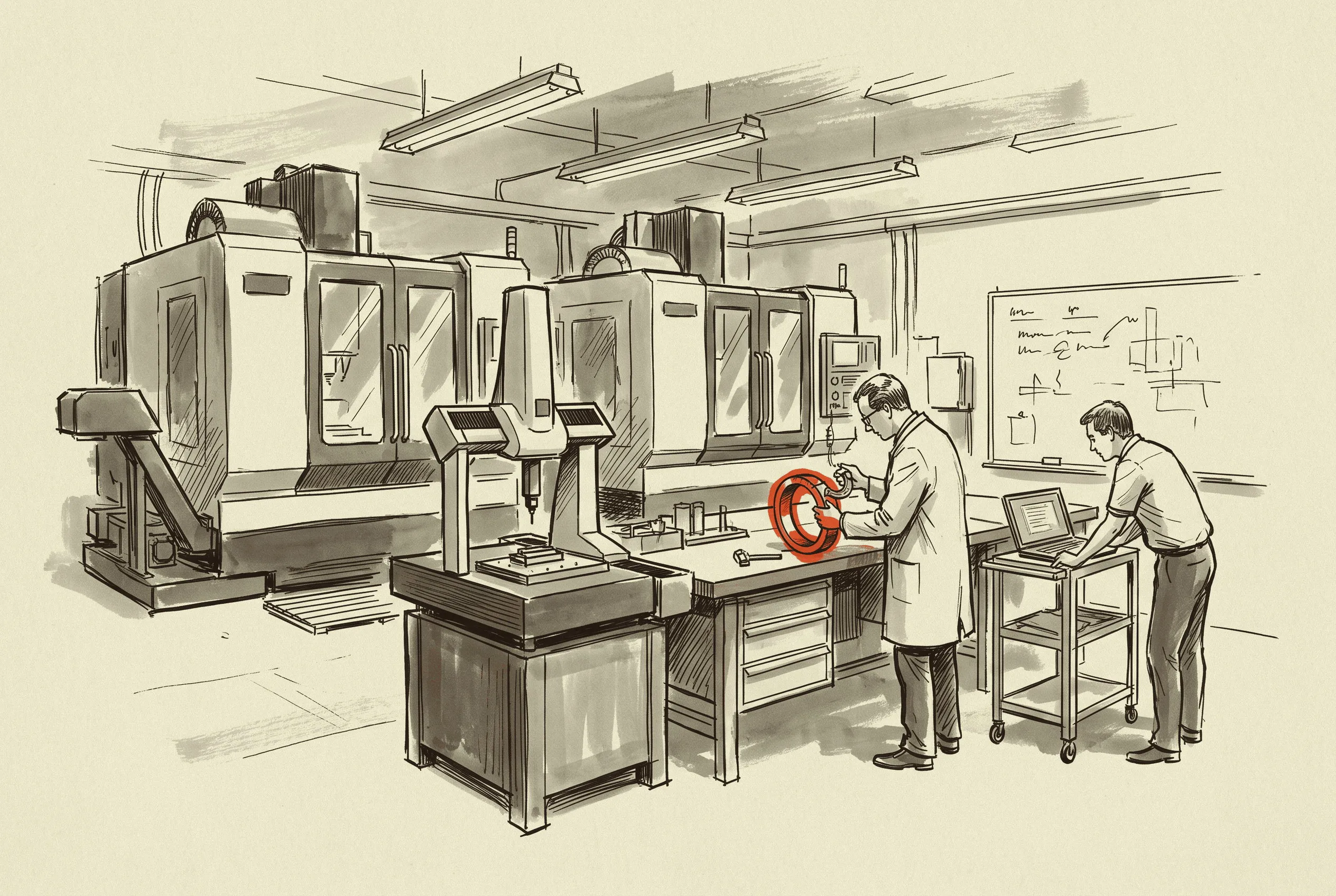
The money followed the factory. In June 2022 CloudNC closed a $45 million Series B led by Autodesk, with Lockheed Martin, British Patient Capital, Atomico, Episode 1 Ventures and QVentures. CAM Assist went into beta in January 2023 and into the Autodesk App Store in September 2023 as a plug-in for Fusion 360. By February 2024 the company had signed DSI, the largest US reseller of Fusion, and CAM Assist was in the hands of hundreds of programmers. On 8 September 2025 CAM Assist 2.0 shipped and the company announced the 1,000-shop mark. On 8 September 2026, a year later to the day, it announced the $20 million extension led by Nimble Ventures with Calculus Venture Capital, Entrepreneur First and LM Ventures, Lockheed Martin’s venture arm, taking lifetime funding to $128 million. Headcount is 80.
$45 million for CloudNC in 2022 and $20 million in 2026, $4.1 million for Limitless Labs in 2025 and $20 million in 2026. Lockheed Martin is the connecting thread: an investor in CloudNC since 2022 and, per Tech.eu, a customer alongside Major Tool and Machine, the Indianapolis aerospace shop. The company is working with Knox Systems toward FedRAMP authorization, which is what a defence prime’s IT department asks for before a cloud tool touches a part file. In the disclosure scorecard both CloudNC and Limitless Labs publish more about their integrations and security posture than most machine-tool builders publish about lead times.
What CAM Assist Does Inside Mastercam and Siemens NX
CAM Assist reads a 3D model and proposes the machining strategy: the operations, the order, the tools from the shop’s own library, and physics-based feeds and speeds, with a cycle-time estimate and what the company calls instant machinability feedback. The programmer reviews it, suppresses or edits operations, and hands off to the CAM package’s own toolpath engine. It covers 3-axis and 3+2 milling today, not lathes or mill-turns. The company’s claim is that it completes up to 80% of a CAM program in minutes, takes an hour to learn, and installs the same day.

The reach across CAM systems is the part that took four years. CAM Assist runs inside Autodesk Fusion, Mastercam 2025 through 2027, Siemens NX 2306 through 2512, GibbsCAM 2025 and 2026 and SolidCAM from 2025 SP4, with PTC Creo announced as coming. Certifications are SOC 2 Type 2, ISO 27001 and Cyber Essentials Plus, with an AWS GovCloud option for the Mastercam, GibbsCAM and NX versions. Two adjacent tools ship with it: a free Soft Jaw Designer and a Cutting Parameters Explorer. The next product, Quote Agent, applies the same engine to estimating, so that a shop can price a part from the model before anyone programs it. Quote Check does the same job for a buyer reading a switchgear quote, turned around here to face the shop that has to write one.
Six systems for CloudNC (five shipping, Creo coming), three for Limitless Labs (Mastercam and NX shipping, Creo coming) plus the Cimatron agent it built with Sandvik. Mastercam and Siemens NX, the two most common systems in American aerospace and job shops, are covered by both. A shop on Fusion, GibbsCAM or SolidCAM has one option today, a shop on Cimatron has the other, and a shop on Mastercam or NX can run a head-to-head on its own parts.
Limitless Labs: The Physics of Cutting as a Foundation Model
David Priev and Assaf Peleg are both graduates of Unit 81, the Israeli military’s technology unit, where, per Calcalist, they built engineering tools and plug-ins for complex 3D software. Their third co-founder, Shahaf Finder, is a doctoral researcher in machine learning and deep neural networks at Ben-Gurion University. They founded the company in 2024 as LimitlessCNC and came out of stealth on 24 April 2025 with a $4.1 million seed from Grove Ventures and Meron Capital, 15 employees and one Tier-1 customer running more than 250 CNC machines.
The technical bet is a foundation model trained on three things at once: the physics of metal cutting, the geometry of design files, and the constraints of real machines and tool libraries. The agent sits inside the CAM system the shop already owns, reads the part, selects tools from the shop’s library, sequences the operations and generates the toolpaths, and hands the result to the programmer for review. Priev’s framing, in the IMTS release, is that the goal “is not to remove programmers from the floor. It is to take the knowledge of your best programmer and scale it across every new part.”
Fourteen months after the seed, on 16 June 2026, Limitless Labs closed a $20 million Series A co-led by Dell Technologies Capital and Square Peg, with Grove Ventures, Meron Capital and Kinetica returning, for $27.3 million in total. The customer list had moved from pilots to production: Blue Origin, Cadillac Formula 1, ISCAR and Sandvik in the release, with GM, Elbit Systems and Samson AG on the company’s site. The production figure is a programming-time cut of up to 50%, and the release gives it in minutes: programs that took two hours done in under ten, multi-operation programs in under five, jobs that took three to five days done in hours. The Sandvik relationship became a product: Cimatron 2027 ships a CAM Agent built with Limitless Labs that generates complete 3-axis toolpaths from part geometry and the tool library, in front of Cimatron’s roughly 30,000 users, debuting at IMTS in Chicago on 14 to 19 September 2026 at booth 133255, with Limitless itself at booth 237605. The company is ITAR compliant, SOC 2 Type II and ISO 27001 certified, deployable on AWS GovCloud, has opened a US office in Oradell, New Jersey, and plans to double headcount within the year.
What the Shops Report
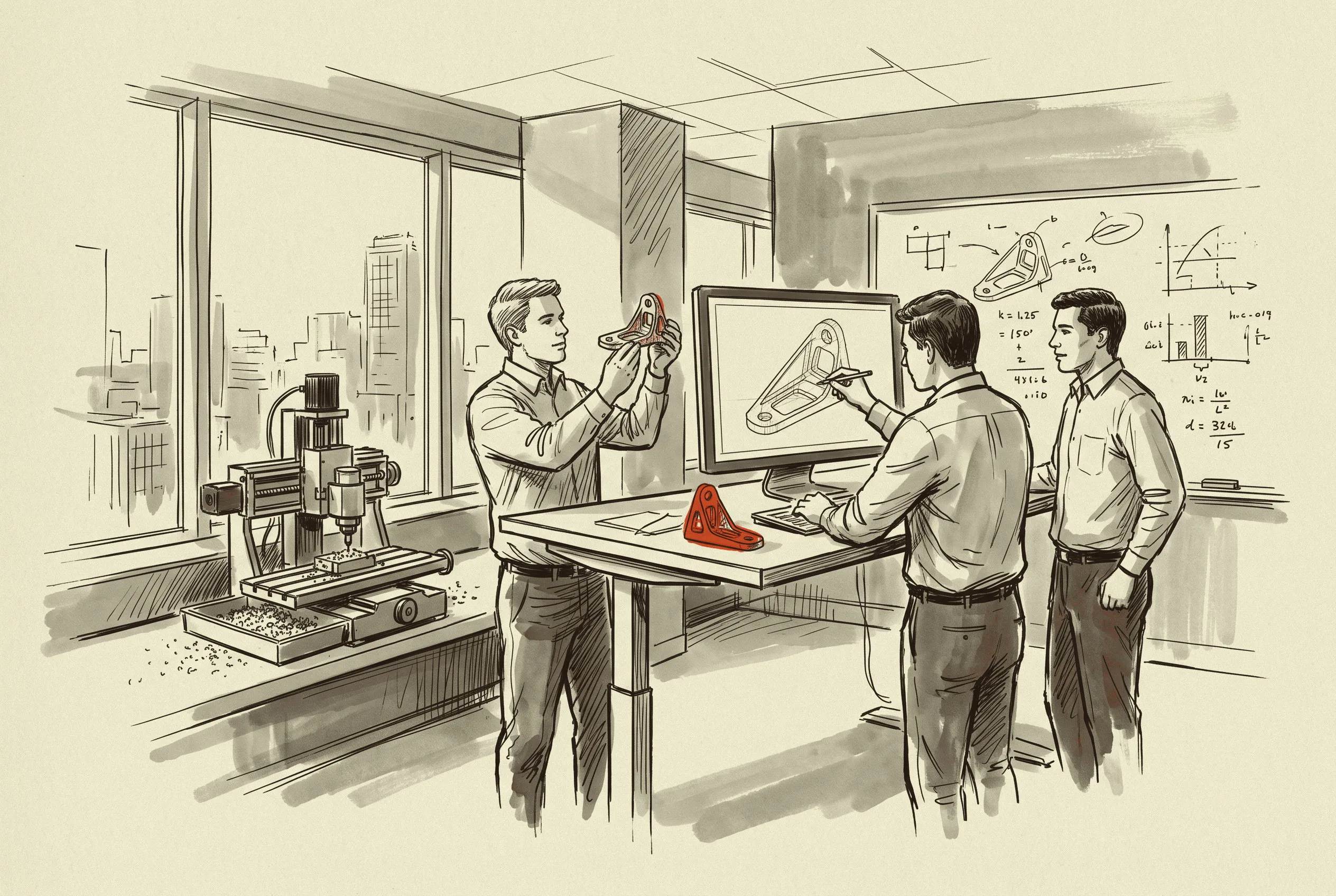
The published numbers from users are consistent in shape: an hour or two of programming per part becomes ten to twenty minutes, with the programmer spending the saved time on the parts that need judgment. CloudNC’s case study of MSP Manufacturing is the most precise: a part that took the programmer 1.5 to 2 hours got 80% of the way in 7 minutes, and 15 minutes of fine-tuning finished it. Xeon NC reports an hour becoming 12 minutes. Dreamz Machining puts it in money: two days a month of programming saved, which it values at $50,000 a year. FJH Group says the software pays for itself in three days. Avalanche Energy, the fusion startup, says it saved three months of programming time. Titan Gilroy of Maki Precision Machining, whose Titans of CNC channel is watched by a good share of the trade, says it cut programming time by 80%.
105 minutes to 22 at MSP Manufacturing, 60 to 12 at Xeon NC, 120 to under 10 at the Limitless enterprise customer. Andy Soos of Bedford CNC, a UK three-axis shop that has used CAM Assist for six months, describes the second-order effect: the 3+2 features let him take on jobs he would have turned away, and a guided tool-library import ended the manual library management that every small shop does badly. The machine-tool piece found the same pattern from the other side: the average machine sold in 2026 is dearer and more capable than the one it replaces, and the shop’s ability to feed it programs is what decides whether the fourth axis ever gets used.
What a Seat Should Save
Both companies price per seat and neither publishes a list price, which is normal for CAM: Mastercam has always sold through resellers, and the public reference points are Autodesk’s, at $680 a year for Fusion and $1,465 a year for its Manufacturing Extension. A buyer should ask each vendor for the seat price in writing, and then do the arithmetic in the first chart with their own wage and their own CAM share. A programmer at $88,556 loaded who spends half the year in CAM and gets half of that back returns $22,139, so a seat priced anywhere near the Fusion extension pays for itself in the first month and a seat priced at a fifth of the saving still returns four to one.
The value is larger than the wage line suggests, because the programmer is usually the person the machine is waiting for. In the VF-2 total-cost piece we excluded the CAM seat and the operator on purpose, and put the ten-year cost of owning and feeding one machine at $172,523, from the Bid-Tab Price Book machine-tool worked example. A machine idle for a shift while a part is programmed is burning the whole of that line and none of the revenue. The Equipment Price Benchmark takes the seat price a shop is quoted and the minutes it measures, so the next shop’s quote has a comparison. The Lead-Time Monitor is where we watch machine deliveries. The programmer is the lead time after the machine lands.
The wider machinery market makes the case stronger. Machine imports from Japan and Germany land with about 15% of tariff on top of list under the current schedule, which the Tariff Exposure Calculator applies to a specific quote, so a new spindle is dearer than it was and the software seat that keeps the existing one cutting is comparatively cheaper. Used machines are moving too, as the auction index shows, and every used machine that changes hands needs someone to program it in its new shop. Companies like Nox Metals are cutting the wait for material from days to a day and a half, and SendCutSend turns sheet parts in two to four days. As the material arrives faster, the program becomes the longest step between the drawing and the chip.
What to Do Monday
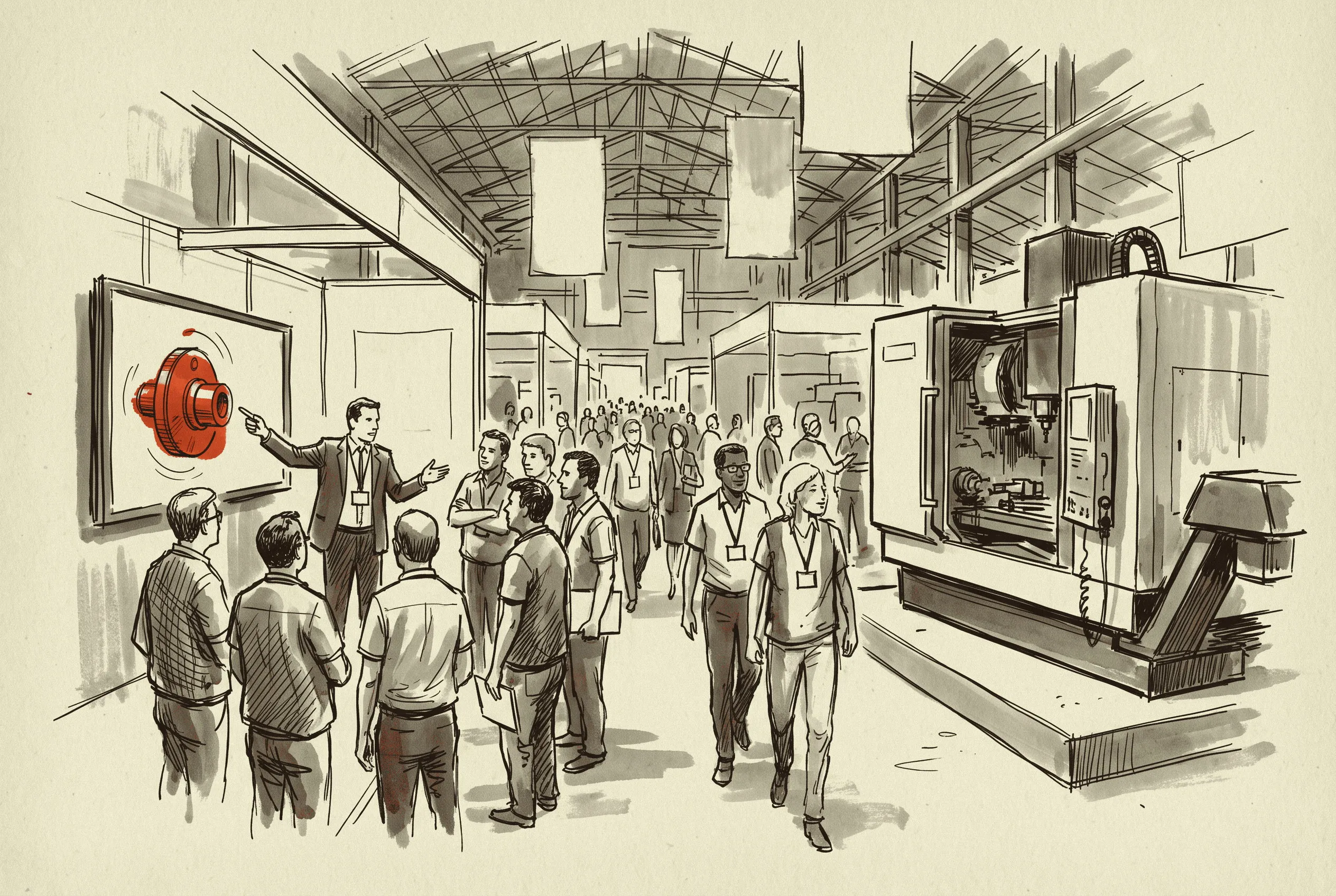
Pick the ten parts your shop programmed most recently, with the time each one took, and run five through each vendor’s trial. Time them with the same programmer, on the same machine, with the shop’s real tool library imported, and count the finishing minutes as well as the generation minutes, the way MSP did. Ask both vendors for the seat price in writing, per named user and per floating seat, and for the data terms: where the part files go, whether GovCloud or on-premise deployment is available, and what happens to the learned strategies if you leave. Ask CloudNC when Quote Agent ships and whether your trial can include it. Ask Limitless Labs whether the Creo integration has a date and whether the Cimatron agent will be sold by Sandvik or by them. If you are at IMTS between 14 and 19 September, both are on the floor, and the Lead-Time Schedule is the tool to have open when a machine-tool builder at the next booth quotes a delivery.
Behind the paywall: the 30-day pilot plan with the measurements that make a trial a decision, the seat math for a one-programmer, three-programmer and ten-programmer shop, and the eleven questions to put to both vendors, with the answers we would want to hear. The Equipment Price Benchmark form is where the measured minutes go.